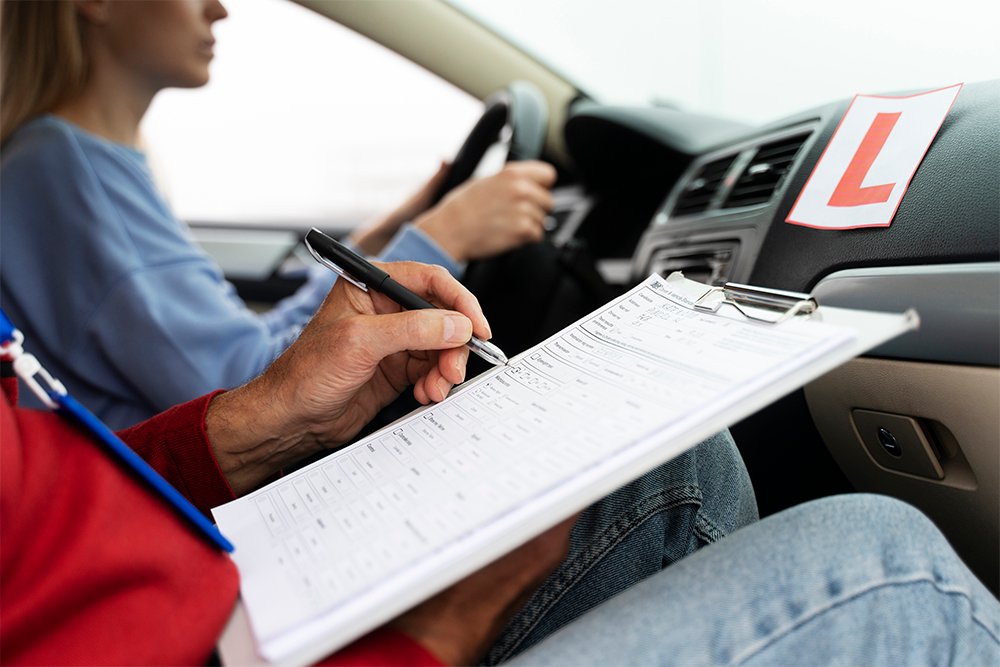
Passing your driving test on the first try feels hard when you do not know what to expect. Many learners worry about the learner permit test, the hazard perception test, the logbook hours, and the practical driving exam, all at once. The good news is that each step has clear rules, and you can prepare for them one by one. This guide explains the full path in plain words, from your first practice questions to test day on the road. Whether you live in Sydney, Melbourne, Brisbane, Perth, or a small town, you will find a simple plan here. Use it to build skill, stay calm, and pass with confidence.
Key Takeaways
- Every state and territory sets its own rules, so always start with your local road authority.
- Learn the official handbook first, then use practice questions to check what stuck.
- Log driving hours in different weather, times of day, and road types.
- book lessons with a qualified instructor, even if a family member also supervises you.
- Practise the exact moves examiners watch, such as mirror checks, speed control, and stopping at signs.
- Rest well, arrive early, and treat test day like any other drive.
The Short Answer: How Do You Pass First Time?
To pass your driving test in Australia on the first attempt, study your state’s official road rules handbook, practise knowledge test questions every day, complete your logbook hours in many conditions, take lessons from a qualified instructor, rehearse common test skills, and arrive at the test rested and on time. That is the whole plan. The rest of this article shows you how to do each part well.
Understand the Steps Before You Start
Getting a full licence in Australia follows a staged system called graduated licensing. The names and ages change by state, but the pattern is similar everywhere.
| Stage | What it means | What to do |
| Knowledge test | A computer based test on road rules and signs | Study the handbook and take practice questions |
| Learner licence | You drive with a fully licensed supervisor | Log hours and take lessons |
| Hazard perception test | A video based test on spotting danger early | Practise with online clips |
| Practical driving test | An examiner rides with you on real roads | Rehearse skills and test routes |
| Provisional licence | You drive alone with some limits | Follow the P plate rules closely |
Knowing this map removes a lot of stress. You are not facing one giant exam. You are facing five small ones.
Step 1: Pass the Knowledge Test With Smart Practice
The knowledge test is your first gate. It checks that you know road rules, road signs, and safe driving habits. Questions are multiple choice, and the exact number of questions and pass mark depends on your state. Different websites list different pass marks, which is a good reason to confirm the numbers on your state government page before you book.
Here is a study method that works for most people:
- Read one chapter of your official handbook each day.
- Write down every rule that surprised you.
- Take a short practice quiz on that chapter the same day.
- Review each wrong answer and read the rule again.
- Finish with full length mock tests in the last week.
A site like Driving Test Australia offers free practice questions for every state and territory, which makes daily practice easy. Practice sites are a helpful extra, but they do not replace the official handbook. Your handbook is the source of truth if two sources ever disagree.
Tip: Do not memorise answers by their position on screen. Learn why the rule exists. When you understand the reason, you can answer a question even if it is worded in a way you have never seen.
Step 2: Complete Your Logbook Hours the Right Way
Most states ask younger learners to log a set number of supervised hours before the practical test. In New South Wales, learners under 25 must log 120 hours, including 20 hours of night driving, and the logbook is checked before the test, according to guides from EzLicence and Excel Drive School. Other states use different numbers. Victoria and Queensland, for example, have their own hour targets, so check your local authority for the current figure.
Hours alone do not make you a safe driver. Quality matters more than quantity. Try to cover:
- Quiet suburban streets, to build smooth steering and braking
- Busy roads at rush hour, to practise gaps and merging
- Roundabouts of different sizes
- Night driving and rain, if the weather allows
- Highways, if your licence rules permit
- Parking in tight spaces
One hour spent on hard skills is worth more than three hours circling the same easy block.
Step 3: Get Ready for the Hazard Perception Test
In states that use it, the hazard perception test (often called the HPT) shows short video clips of real traffic. You click when you spot something that could become dangerous, such as a child near a parked car or a truck pulling out.
To prepare:
- Watch the road far ahead, not just the car in front of you.
- Look for clues, like brake lights, open car doors, and pedestrians looking at their phones.
- Practise with official or trusted online clips.
- Do not click at random. Early, correct clicks score well, while too many clicks can cost you points.
The best training for this test is real driving. Ask your supervisor to call out hazards while you drive, and do the same when you sit in the passenger seat.
Step 4: Practise What Examiners Actually Watch
Examiners are not trying to trick you. They want to see that you can drive safely without help. Most tests last around 30 to 45 minutes and cover normal roads, turns, lane changes, and a parking or reversing task.
| Skill | What examiners want to see |
| Mirror and shoulder checks | Clear head movement before you move off, change lanes, or turn |
| Speed control | Steady speed that matches the limit and the road |
| Stopping at signs | A full stop behind the line, not a rolling stop |
| Following distance | A safe gap, which the three second rule can help you judge |
| Roundabouts | Correct lane, correct signal, and giving way properly |
| Parking and reversing | Calm control and good observation |
In New South Wales, about 56% of candidates pass the practical test overall, and some busy Sydney centres see rates closer to 47%, based on figures reported by AUDrive from Transport for NSW data. That means roughly half of candidates in some places do not pass, and most fail because of habits they could have fixed with more practice.
A single serious error, such as ignoring a stop sign or failing to give way, can end the test. Small mistakes, like a slightly wide turn, add up but are often recoverable.
Step 5: Choose a Good Driving Instructor
A qualified instructor knows what examiners look for. They also teach in a car with dual controls, which helps you learn faster and feel safe.
When you choose one:
- Check that they are licensed by your state.
- Ask about their teaching style and their pass rates.
- Read recent reviews from students in your area.
- Book a trial lesson before paying for a package.
- Ask whether they know your local test routes.
Supervisors who are family members are great for hours in the logbook. Instructors are great for fixing bad habits before they stick. Using both gives you the best of each.
Step 6: Plan Test Day
Small choices on test day can protect your result.
- Sleep well the night before. Last minute cramming rarely helps.
- Eat a light meal and drink water.
- Bring your learner licence, logbook, and any other papers your state asks for.
- Arrive at least 15 minutes early.
- Take a warm up drive in the same car you will use for the test.
- Check that your car is roadworthy, with working lights, indicators, and tyres in good shape.
- Take a slow breath before you start the engine.
If you feel nervous, that is normal. Nerves usually settle after the first few minutes of driving. Speak up if you did not hear an instruction. Asking the examiner to repeat it is fine.
Common Mistakes That Cause a Fail
| Mistake | How to avoid it |
| Skipping shoulder checks | Make it a habit on every drive, not only in lessons |
| Rolling through stop signs | Come to a full stop and count one second |
| Driving too slowly | Match the speed limit when it is safe |
| Poor lane position | Practise lane discipline on multi lane roads |
| Freezing at roundabouts | Practise at quiet times, then busier ones |
| Panicking after a small error | Reset and keep driving, since one mistake is not always a fail |
A Simple Eight Week Study Plan
This example plan is a starting point, not an official schedule. Adjust it to your state and your lesson times.
- Weeks 1 and 2: Read the handbook and take daily practice questions.
- Weeks 3 and 4: Book your knowledge test, get your learner licence, and start logging hours.
- Weeks 5 and 6: Add lessons with an instructor and practise hazard perception clips.
- Week 7: Drive your likely test routes and practise parking and turning.
- Week 8: Do a mock test with your instructor and rest before your booking.
Learners who sit their test with a slow, steady plan tend to feel much calmer than those who rush.
A Quick Example Scenario
Here is a made up example to show how the steps fit together. Sam, a 17 year old learner, spends two weeks on the handbook and practice quizzes, passes the knowledge test, and starts logging hours on weekends. Sam books one lesson a fortnight to fix mistakes and asks the instructor to focus on roundabouts, which felt scary. By the last month, Sam drives the test routes twice, reviews each error, and books the test only after two clean mock drives. This is an illustration, not a real case, but it shows why steady practice beats last minute cramming.
Frequently Asked Questions
How many times can I fail the driving test?
Most states let you retake the test, but there is usually a fee and a waiting period. Check your local authority for the current rules and costs.
Do I need a professional instructor?
Rules differ by state, but an instructor is not always required. Even so, most learners gain a lot from at least a few professional lessons, because instructors know what examiners look for.
Are practice test sites the same as the real test?
No. Practice sites help you learn the format and check your knowledge, but the official handbook and your state road authority are the final word. A free tool such as Driving Test Australia is best used as a study aid alongside official material.
What happens if I make a small mistake during the test?
A small error does not always mean a fail. Stay calm and keep driving safely. Serious errors, such as ignoring a stop sign or causing danger to others, can end the test.
How long should I prepare?
Many learners spend two to three months on the knowledge and skills steps together, but it depends on your age, state, and how often you can drive. Follow your state’s minimum hours and give yourself extra time if you feel unsure.
Final Thoughts
Passing your driving test the first time comes down to steady habits. Learn the rules from the official handbook, practise questions often, log hours in many conditions, and use an instructor to fix weak spots. On test day, stay calm and drive the way you have practised. If you follow the steps in this guide, you will arrive at the test feeling ready instead of worried.
Rules, fees, and pass marks change often and differ by state. Confirm all figures with your local road authority, such as Transport for NSW, VicRoads, Queensland Transport and Main Roads, or your state equivalent, before you book.